
Keynotes

Dr.Chalitda Mathayomborush
Electronic Transactions Development Agency (ETDA), Thailand
Topic : Architecting a Digital Trust Ecosystem: Synchronizing Digital Identity and AI Governance for Thailand’s Future
The rapid expansion of digital technologies and artificial intelligence (AI) has heightened the need for robust digital trust frameworks, particularly in countries undergoing large-scale digital transformation. This paper explores the architecture of a Digital Trust Ecosystem for Thailand, focusing on the strategic synchronization between digital identity infrastructures and AI governance mechanisms. It examines how trusted and interoperable digital identity systems can function as foundational enablers for accountable, transparent, and responsible AI deployment across public and private sectors. The study analyzes key governance challenges, including data protection, algorithmic accountability, institutional coordination, and regulatory coherence, within Thailand’s evolving digital policy landscape.

Professor
Dr.Takafumi Nakanishi
School of Computer Science, Tokyo University of Technology, Japan
Topic : Explainable AI as an Engineering Pillar of AI Ethics: From Forward Explanations to Approximate Inverse Model Explanations (AIME)
Modern AI and machine learning models are increasingly responsible for decision-making in high-risk domains, such as autonomous driving, medical diagnosis, and finance. High accuracy alone is no longer sufficient; we also need to understand how a model makes its predictions. In healthcare, for example, the rationale behind a diagnosis can be as important as the diagnosis itself to earn clinicians’ trust. In finance, regulations may require explanations for decisions such as credit approvals. While today’s machine learning models often outperform humans, their opacity raises serious concerns regarding their reliability. In particular, when deploying AI/ML systems in society, explainability becomes a foundational requirement for establishing trust, accountability, fairness, and transparency in decision making. If we cannot explain a model’s behavior, we risk operating systems that embed bias or behave unpredictably in critical situations. This is a major issue from the perspective of AI ethics: AI systems that fail to meet ethical principles, such as transparency and accountability, are unlikely to be accepted by society. A lack of transparency can erode user trust and cause real-world harm.

Professor
Dr.Fang Shang
School of Informatics and Engineering, The University of Electro-Communications
Topic : Quaternion Neural Networks and Their Applications
Quaternion Neural Networks (QNNs) are a powerful framework that strongly connects artificial intelligence (AI) and the real world. In this presentation, she will introduce the basics and features of QNN and the recent ideas on their engineering applications, especially when we adaptively process the polarization information of electromagnetic waves. Examples on remote sensing, such as Earth observation radar mounted on artificial satellites or aircraft and underground radar, as well as mobile communication will be shown.
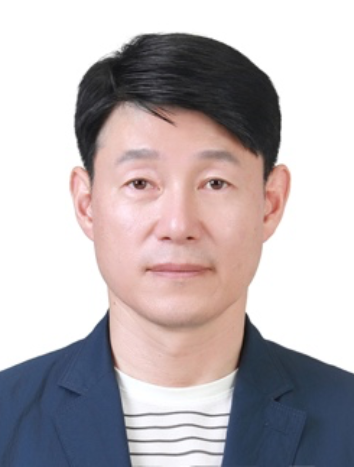
Dr.Lee Man Hee
Topic : AI-Driven Transformation of Air Defense: Designing and Validating a High-Speed C2 Architecture Against Drone Swarms
The proliferation of low-cost, high-efficiency drones, as witnessed in the Russia–Ukraine conflict, has fundamentally disrupted traditional air defense dynamics. Current Command and Control (C2) systems suffer from cognitive bottlenecks and manual analysis, causing critical delays in decision-making. This presentation introduces a novel AI-based Air Defense C2 Architecture (C2A) designed to overcome these limitations through real-time sensor fusion and automated decision support within a human-AI teaming model.
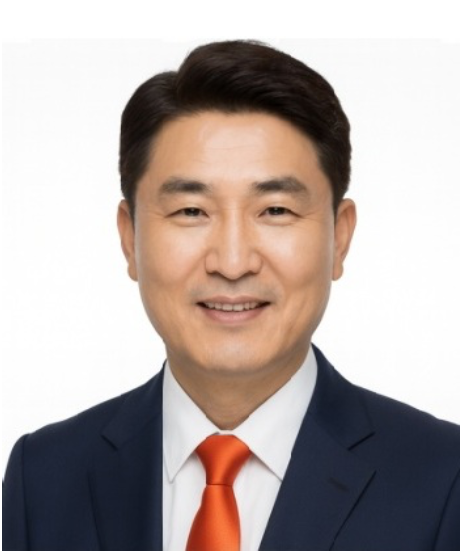
Brigadier General (Ret.)
Oh Son Moon
ROK Air Force Headquarters, Air Power Development Committee, Republic of Korea
Topic : AI-applied Integrated Missile Defense Systems
This study proposes an AI-enabled integrated air and missile defense architecture to counter complex and saturated threats involving ballistic and hypersonic missiles, UAVs, and drones. By applying AI-based integrated C2, it operationalizes the “Any Sensor, Best Shooter” concept and suggests organizational and operational transformations toward future defense systems.
Professor
Dr. Shinichi Yamagiwa
Institute of Systems and Information Engineering, University of Tsukuba, Japan
Topic : Stream-based lossless data compression technology
Data stream is a major data type in modern information equipment such as sensory and video/sound devices, which is fast and continuously generated without any stall cycle. Due to artificial intelligence becoming a common tool to extend application domain for information equipment, reduction of streaming data via communication path is an emerged and crucial theme targeted to support fast and large data migration among edge devices and cloud servers for IoT applications. This talk introduces a novel lossless compression algorithm targeted for the streaming data. The algorithm is hardware friendly and processes the streaming data without any delay. The talk will show the advancing steps of the mechanisms of the stream-based lossless data compression. And then, it shows impact on implementing the algorithms in hardware.